
 By Admin

Last updated: October 28, 2026
A driveway retaining wall is not just a soil wall with a neat finish; once it borders or supports a driveway, it has to deal with vehicle load, edge protection, and movement from turning and parking. Retaining Wall for Driveways: What Changes When the Wall Supports Traffic Loads is the question this article answers, because the wall’s placement, reinforcement, compaction, and sometimes the guardrail detail change once traffic is involved.
Quick Answer: A driveway retaining wall usually needs more than a normal landscape wall; the design should assume vehicle surcharge, protected edges, and controlled compaction, and a professional should confirm the layout when cars, trucks, or tight turning are involved.
What changes when a wall supports a driveway
A wall that supports a driveway must resist more than lateral soil pressure; it also has to handle vehicle surcharge from cars, trucks, and the repeated push-pull of braking, turning, and parking. That extra load changes the wall from a simple landscape element into a traffic-adjacent structure that needs a wider margin for error.
The practical difference starts at the top of the wall. A retained slope behind a garden wall can tolerate light surface use nearby, but a driveway concentrates loads along a hard edge. A wheel near the lip creates a different load path than foot traffic or a planting bed. Turning vehicles are worse because they add lateral forces and can place a tire close to the unsupported edge. Even a parked vehicle can matter if it sits where the driveway slab, gravel section, or paved apron spans too close to the wall.
That means three details become non-negotiable: the wall needs a footing sized for the wall system, the backfill needs controlled compaction in thin lifts, and the edge needs to be protected from vehicles crossing or straddling the drop. In many driveway projects, the wall also has to coordinate with the pavement structure above it. A slab, asphalt section, or paver base does not behave like loose fill, so the transition zone needs deliberate design instead of a casual tie-in.
A common mistake is treating the driveway edge like a normal yard edge and building the wall flush to the pavement with no barrier. That looks clean on day one, then becomes the first place a tire can overrun. The safer approach is to plan the edge as a protected boundary, not just a wall face. For a specific site, consult a structural or retaining-wall professional, because traffic exposure changes the details more than a simple garden wall would.
For broader planning context, this is one piece of the larger retaining wall design and planning process, but driveway support deserves its own checks because the load case is different.
How vehicle surcharge changes the design
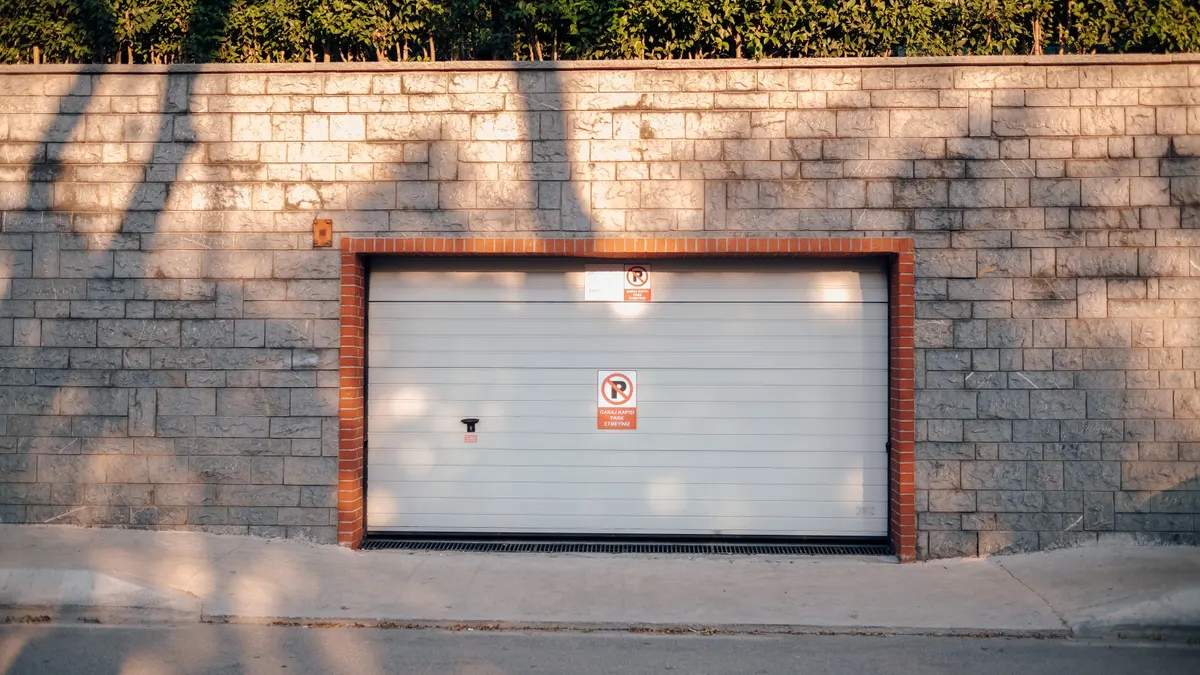
Vehicle surcharge changes the wall design by adding a live load near the top edge, which increases the earth pressure the wall must resist. In plain terms, the wall is not only holding soil back; it is also dealing with the extra stress created when a vehicle is close enough to affect the retained zone.
The exact effect depends on how close traffic gets to the wall, how heavy the vehicles are, and whether the driveway is level with the wall top or slopes toward it. A passenger car parked several feet back is not the same as a delivery truck turning within a tight radius at the edge. Driveway walls often see repeated loading in the same zone, which matters because repeated loading is what exposes weak compaction, poor drainage, and underbuilt reinforcement.
This is where many generic retaining wall articles go wrong: they assume one static soil load and stop there. A driveway wall has to account for a moving load and for the possibility that drivers will use the edge differently than planned. If the driveway width is tight, drivers tend to cut the corner. If the pavement is narrow, tires migrate toward the outer edge. If the site is sloped, they may park with the heaviest part of the vehicle closer to the wall than the drawing suggests.
The wall’s system needs to match that reality. Reinforced concrete, segmental retaining wall systems with geogrid, or another engineered wall type may be used depending on the site, but the point is the same: the wall cannot be sized as if only lawn or garden soil is behind it. The loading case changes.
A useful rule of thumb is to think in zones. The zone directly behind and above the wall is the one most sensitive to surcharge. If that zone will carry vehicles, the detail needs to be planned from the start, not added later with a thicker cap or a decorative edge. A decorative finish does nothing for vehicle surcharge.
Driveway retaining wall placement: the edge, the setback, and the ramp
Driveway retaining wall placement should leave a protected edge, a buildable base, and enough room for the driveway profile to work without loading the wall face. That means the wall is placed to support the driveway geometry, not jammed against it.
The biggest placement issue is the edge condition. If the driveway runs along a drop, the wall should not be the thing a tire can reach by accident. That is where edge protection comes in, whether through a curb, barrier, guardrail, wheel stop, or a raised edge detail that keeps vehicles from wandering into the danger zone. A guardrail is not decoration here; it is a separate safety element when the drop and traffic exposure justify it.
Access ramps add another layer. A driveway ramp changes where wheels bear, especially where the grade transitions from flat to sloped. If the ramp begins too close to the wall, the transition can shove load toward the edge and create cracking or rutting. A short, abrupt ramp also makes scraping and tire creep more likely, which is bad for both the pavement and the wall support zone. The transition should be smooth enough that vehicles do not “hunt” for the edge while climbing or descending.
Parking areas need a similar check. If a car will park parallel to the wall, the pavement edge should not sit on an unsupported strip. If the parking pad turns toward the wall, the wheel path needs enough width that normal turning does not brush the barrier. A narrow pad can make the wall itself feel like a curb, which is exactly the condition you want to avoid.
I do not recommend a driveway wall design that relies on “careful drivers” as the only protection. People clip curbs, swing wide, and park off-center. If the wall is carrying or bordering traffic, the geometry has to assume imperfect use.
The core build sequence for a driveway wall

A driveway wall works only when the base, reinforcement, compaction, and edge protection are built in the right order. The sequence below is the part most likely to go wrong if the wall is treated like a standard landscaping wall, so consult a qualified professional if the site has traffic exposure or a tight edge condition.
- Set the wall line and traffic edge first. Mark the wall, driveway edge, and any guardrail or barrier clearance before digging so the finished pavement has room to function without crowding the wall.
- Excavate to the planned base depth and width. Leave enough room for the footing or base course plus working space; a cramped trench makes it hard to keep the wall straight and compact the base properly.
- Build the base on compacted, well-graded material. Place the base in thin lifts and compact each lift so the wall does not settle unevenly under the driveway edge.
- Install the wall units or formwork with reinforcement in place. If the system uses geogrid, rebar, or another reinforcement method, place it exactly where the system calls for it; traffic loads punish sloppy placement quickly.
- Backfill in thin lifts and compact each lift near the wall. Use controlled compaction so the fill behind the wall is dense enough to resist movement without bowing the face or disturbing the reinforcement.
- Finish the top with edge protection and the driveway surface tie-in. Add the curb, barrier, or guard detail, then tie the pavement or gravel edge so the wheel path stays out of the vulnerable zone.
The specific numbers vary by wall system, but the method does not: thin lifts, controlled compaction, and reinforcement installed where the design expects it. Skipping any of those steps can turn a driveway wall into a settlement problem in one season instead of a long-term structure.
For standards context, the National Concrete Masonry Association publishes guidance on segmental retaining wall systems, and ASTM C1372 covers concrete masonry units used in retaining walls; both are relevant references when the wall system itself matters. The American Society of Civil Engineers also has buried-structure and retaining-wall related design resources that design professionals commonly use when traffic loading is part of the problem.
Where driveway walls fail first
Driveway walls usually fail first at the edge, at the drainage zone, or where the soil was compacted too aggressively or not enough. Those are the weak links, and traffic load makes each one worse.
The first failure mode is edge breakage. If the driveway surface ends too close to the wall, the edge can crack, crumble, or rut under a wheel load. That failure is often blamed on the wall, but the real issue is that the pavement edge had no support or protection.
The second failure mode is settlement behind the wall. Poor compaction leaves voids that show up as dips, cracking, or a subtle tilt in the driveway crown. A wall that looks fine from the front can still be failing behind the scenes if the backfill was placed in thick, sloppy lifts. Once vehicles start crossing that area, the settlement speeds up.
The third failure mode is wall movement from turning loads. Turning tires create repeated side stress near the top edge, especially where the driveway narrows or the approach curve is tight. That kind of loading can nudge a marginal wall face out of plumb or loosen the top courses over time.
The fourth failure mode is drainage neglect. Water does not need a dramatic flood to cause trouble; it only has to soften the retained soil or saturate the base. Driveways shed water onto hard surfaces and concentrate runoff at predictable points, so the wall area often sees more water than the owner expects. If the drainage path is not separated from the traffic path, the wall ends up doing two jobs at once.
One honest limitation: if the site needs a tall wall, a sharp driveway turn, and a vehicle area right at the edge, this is not a casual DIY wall. The combination of surcharge, edge exposure, and pavement support can exceed what a simple stacked-block wall should take on. That is the point where a professional structural design is the safer route.
What to specify so the wall matches the driveway
Specify the wall as a traffic-adjacent retaining wall, not a generic landscape wall, so the installer knows the driveway edge, reinforcement, and protection details are part of the job. That wording changes the conversation before anyone starts digging.
The spec should identify the drive surface, the wheel path, and whether the wall borders a parking area, a ramp, or a turning zone. Those are not minor details. A straight driveway with no parking near the edge has a different demand than a tight driveway apron where vehicles back and turn. The wall should also be matched to the surface type above it: concrete, asphalt, pavers, or gravel all behave differently at the edge.
Call out compaction expectations clearly. “Compact fill” is too vague. The crew needs to know that the backfill behind a driveway wall is not decorative fill; it is structural fill that supports a traffic-adjacent condition. If geogrid or another reinforcement is part of the system, it should be described in the plan and not substituted with extra mortar, extra face blocks, or hope.
Edge protection should also be explicit. If the design needs a guardrail, wheel stop, curb, or barrier, say so early. A wall can be structurally sound and still be unsafe if a vehicle can leave the pavement at the wrong angle. The barrier and the wall are different elements, and they solve different problems.
The best driveway wall details are the boring ones, and they are usually the safest too: straight lines, clear clearances, compacted lifts, drainage that does not cross the wheel path, and a top edge that is hard to mistreat. That is what keeps the wall useful after the novelty of the finished project wears off.
Key Takeaways
- A driveway retaining wall has to handle vehicle surcharge, not just soil pressure.
- The edge detail matters as much as the wall face, because tires and turning loads attack the top zone first.
- Compaction, reinforcement, and pavement tie-in are structural choices, not finish work.
- Guardrail or other edge protection belongs in the plan when a drop or traffic exposure creates a hazard.
- Tight ramps, narrow parking areas, and cornering paths are the situations most likely to punish a weak wall detail.
Can a retaining wall hold up a driveway?
Yes, a retaining wall can support or border a driveway when it is designed for vehicle load, proper compaction, and edge protection. For example, the driveway surface and the wall need to be designed as one system, because the traffic load and the retained soil load interact near the top edge.
Does a driveway wall need engineering?
Usually, a driveway wall needs engineering when traffic load, height, slope, or edge exposure make the loading case more complex than a basic landscape wall. The safest answer is that the wall should be treated as a structural element, especially if vehicles park near it or turn close to the edge. A local licensed professional should confirm the design, and on many sites the check is 1 decision that prevents a much larger failure later.
How far should a retaining wall be from a driveway edge?
The wall should be far enough from the driveway edge to leave a stable pavement strip, room for compaction and drainage, and any required edge protection or guardrail. The right setback depends on the driveway width, turning radius, wall height, and whether vehicles can approach the edge. A site-specific layout is the only reliable answer.
Drafted with AI; not yet reviewed by a person.