
 By Admin
Last updated: October 21, 2026
Quick Answer: choose standard blocks for straight runs, tapered blocks for curves, and split-face blocks for visible feature walls. That three-way split is the core of Retaining Wall Block Types Compared: Standard, Tapered, and Split-Face Units.
Key Takeaways
- The first decision is whether the wall is straight, curved, or a feature wall that needs a more finished face.
- Standard blocks are the simplest fit for straight walls and predictable layouts.
- Tapered blocks are the most useful choice when the wall includes curves, corners, or a serpentine layout.
- Split-face block is the usual pick for visible walls because the textured face looks more finished and masonry-like.
Retaining wall block types come down to three practical choices: standard blocks, tapered blocks, and split-face units. The right retaining wall block depends on the wall shape you need, how much cutting you want to avoid, and how visible the finished face will be. In 2024, those three choices still cover most segmental retaining wall layouts.
The one choice that matters first: wall shape or wall look
The first decision is not color or brand; it is whether the wall is straight, gently curved, or a feature wall that needs a more finished face. Standard concrete retaining wall blocks are the plainest and most flexible for layout. Tapered blocks make curves easier. Split-face block is often chosen when appearance matters more than speed.
That sounds simple, but it changes everything about the build. A straight garden wall in a small yard does not need the same unit profile as a broad landscape terrace or a front-yard wall that sits in plain view. A system with interlocking pins can still be part of any of these, yet the shape of the block determines how much work the layout demands before the first course is set.
A useful shortcut: if the wall must bend, taper matters. If the wall must look finished from the street, split-face texture matters. If the wall is mostly structural and hidden by planting, standard block usually makes the most sense. For a quick visual rule, think straight, curved, or featured.
For background on broader wall assemblies and component choices, I link this page to the retaining wall materials and components hub because the block type is only one part of the system. I also link to the retaining wall design guide and the segmental retaining wall drainage overview for layout context.
Standard concrete retaining wall blocks are the safest default
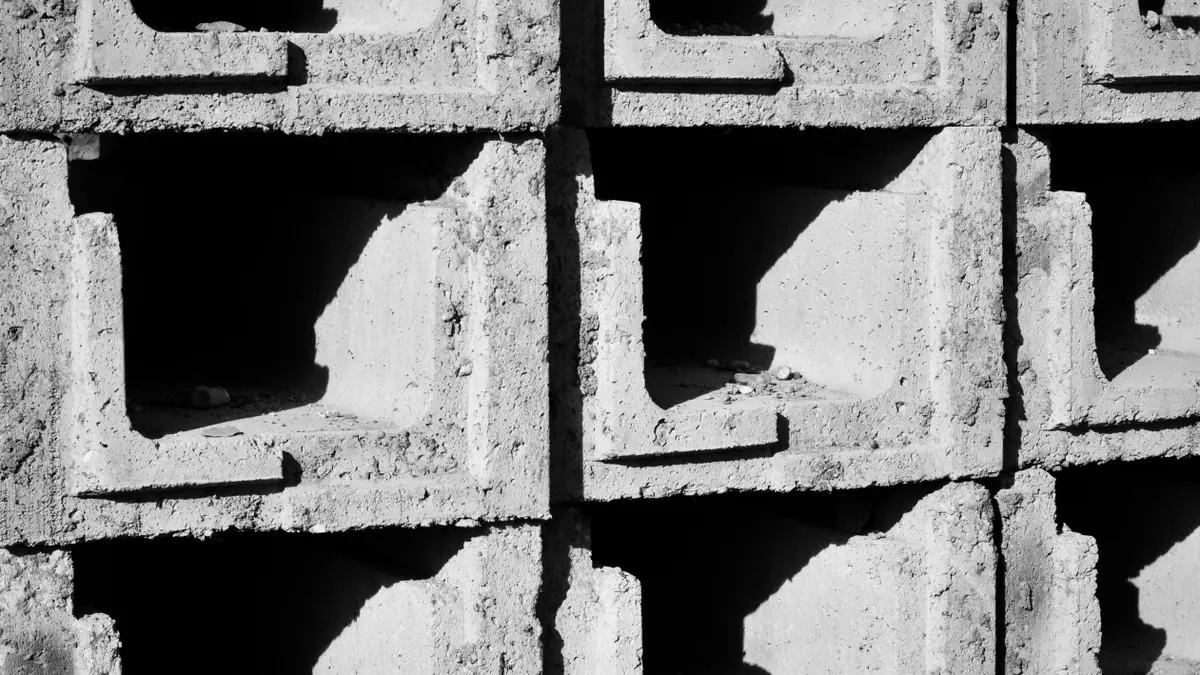
Standard blocks are the simplest option for simple, straight walls and for anyone who wants the most predictable layout. They are usually rectangular concrete units with a flat front face and a consistent depth, often used with interlocking pins or a lip system that sets the setback between courses.
That consistency is the strength. Straight runs line up cleanly, corners are easier to square, and course-to-course geometry is easier to keep true. If the project has long straight sections and only a few adjustments, standard units reduce the chance of awkward gaps and odd cuts. They also tend to be the least visually demanding choice, which is a benefit when the wall will be partially hidden by grade, shrubs, or a fence.
The limitation is just as clear: standard blocks are not the easiest tool for curves. You can force a curve with standard units, but the wall will usually need more cutting, more joint variation, or a larger radius than the site may allow. That means more labor and a higher chance of visible irregularity. For tight-radius curves, standard block is often the wrong answer.
Standard block also looks plain by design. If the wall is a focal point, the uniform face can read as utilitarian rather than finished. It is the right pick for a homeowner or contractor who values layout simplicity over decorative surface texture, and who wants a wall that behaves predictably under a string line and level. For more detail, see the retaining wall block size guide and the concrete retaining wall basics page.
Tapered blocks are the best answer for curves
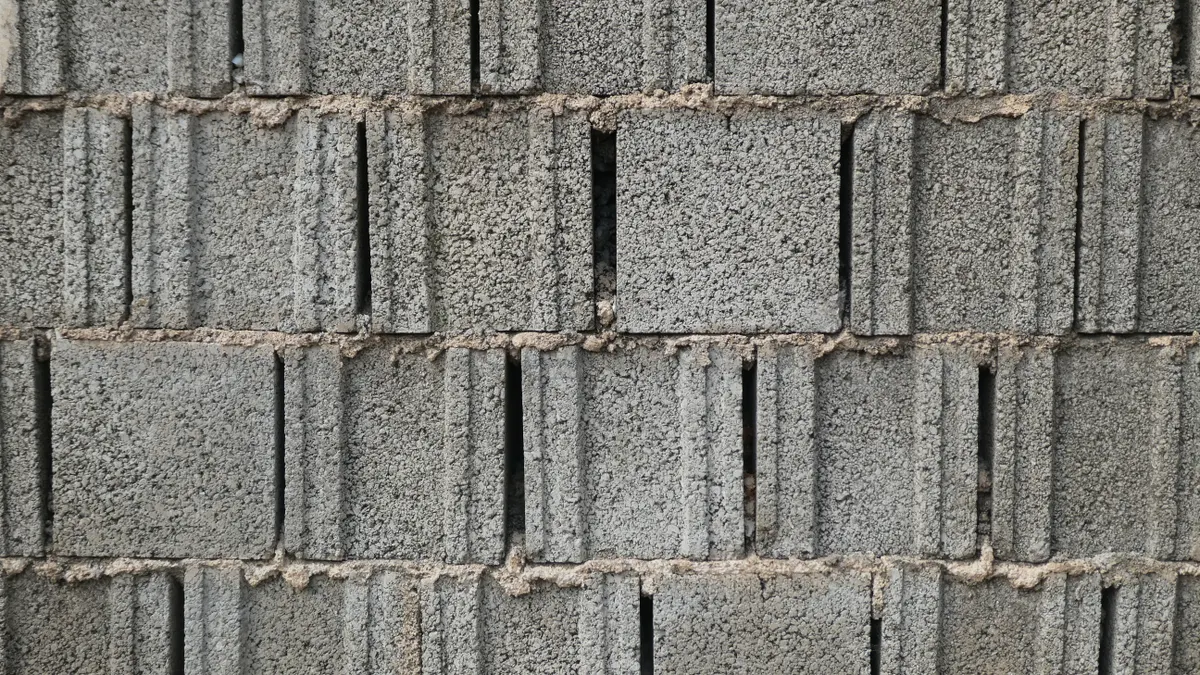
Tapered blocks are the strongest choice when the wall geometry includes curves, sweeping corners, or a serpentine layout. Their shape is designed so the wall can turn gradually without forcing every unit to fight the line. In many segmental systems, the taper is what lets the wall form a smooth arc while keeping the face aligned.
This is the block type to choose when the design itself is the challenge. A backyard seating wall, a curved planter edge, or a landscaped terrace with soft bends becomes much easier with tapered units than with standard rectangular blocks. The system is made to absorb the angle change instead of making the installer create it by eye.
The trade-off is that tapered blocks are not the simplest option for a dead-straight wall. On a long, straight run, the taper can be unnecessary complexity. If the layout is all right angles, a tapered system may still work, but it can feel like using a specialty tool for a common job. It can also be easier to confuse the layout if the taper direction is not kept consistent course to course.
Tapered block is also not a magic fix for poor planning. A wall still needs proper base prep, drainage, and setback control. The block shape helps the geometry; it does not solve site errors. I would steer a reader toward tapered units only when the plan includes a curve that matters enough to justify the extra attention to orientation and pattern. For project planning, the landscape retaining wall design checklist can help.
Split-face block is the best pick when appearance drives the decision
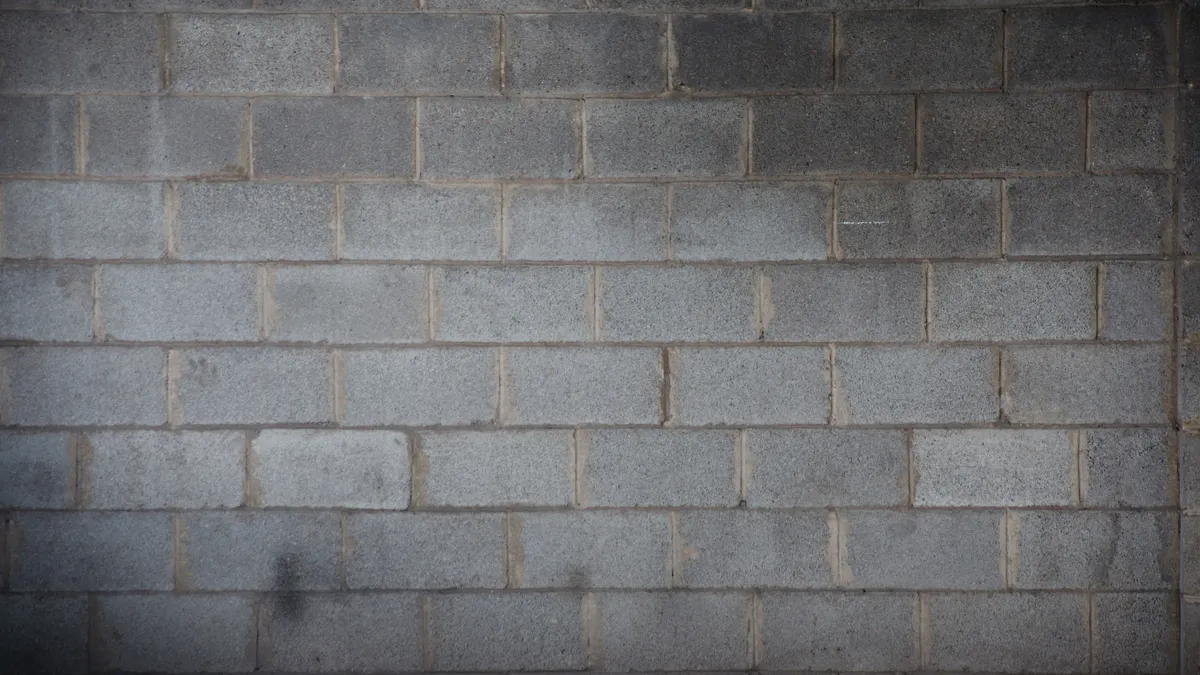
Split-face block is often the pick for visible walls because the surface texture gives the wall a more finished, masonry-like look. The face is intentionally rough and textured rather than smooth, which helps the wall read as a design element instead of a utility structure. If the wall borders a patio, frames a front yard, or sits at eye level, that finish matters.
The advantage is mostly visual, but that is not trivial. A retaining wall can dominate a small site. Split-face texture breaks up light and shadow, hides small surface irregularities better than a smooth face, and pairs well with cap blocks and planting. It can make a basic segmental wall look more deliberate without changing the underlying engineering. For comparison, see the landscape wall cap options page.
The downside is cost in labor and judgment, not just appearance. Split-face units are less forgiving of sloppy alignment because the eye notices the texture and the shadow line. Any mismatch in course height, set-back, or joint spacing can show more clearly than on a plain standard block. The finish also does not excuse the same structural requirements that apply to other concrete retaining wall blocks.
Split-face is the wrong choice for a wall that will be mostly hidden or for a project where speed and simplicity matter more than finish quality. It is also not the best fit when the design goal is a minimal, modern wall with a smooth, understated face. For that use, standard block often looks cleaner.
The honest side-by-side: what actually changes your choice
Standard, tapered, and split-face blocks are not three versions of the same thing. They solve different problems, and the right one depends on wall geometry, visual priority, and how much cutting the layout demands.
| Criteria | Standard blocks | Tapered blocks | Winner for this condition |
|---|---|---|---|
| Straight wall layout | Easiest to snap to a line | Works, but taper may be unnecessary | Standard blocks |
| Curved wall geometry | Can be forced, often awkward | Designed for curves | Tapered blocks |
| Decorative finish | Plain, utilitarian face | Depends on product line | Split-face block |
| Ease of planning | Very predictable | Requires orientation discipline | Standard blocks |
| Small-radius bends | More cutting and joint juggling | Handles turns more naturally | Tapered blocks |
| Visible street-facing wall | Functional, not flashy | Varies by finish | Split-face block |
| Concealed or planted wall | Efficient and unobtrusive | Usually more than needed | Standard blocks |
| Pattern consistency | Strong on straight runs | Strong when the curve is planned well | Depends on geometry |
| Best fit with interlocking pins | Common and straightforward | Common in curved systems | Standard for straight, tapered for curves |
| Surface texture priority | Low | Medium to high depending on face | Split-face block |
The table leads to a simple judgment: geometry first, surface second. If the wall turns, choose taper. If the wall is straight and hidden, choose standard. If the wall is a visible design feature, split-face earns its keep.
For anyone comparing concrete retaining wall blocks in the abstract, that is the mistake to avoid. The block type is not just about strength; it changes how the wall lays out, how the joints behave, and how much correction the installer needs while the courses climb. For code context, the segmental retaining wall standard guide is worth a look, and the retaining wall materials and components hub stays relevant here.
Which retaining wall block type should you choose?
Choose standard blocks if the wall is straight, the budget and labor plan favor simplicity, and you want the easiest path for interlocking pins and cap blocks. Choose tapered blocks if the wall curves, changes direction, or needs a soft radius without constant cutting. Choose split-face block if the wall will be seen up close and the surface texture is part of the design.
None of the three is wrong in the abstract. The wrong choice is matching a decorative block to a hidden wall, or trying to force a straight-run block through a curved layout. A standard unit can be the cleanest answer on a simple terrace wall. A tapered unit can save hours of layout frustration on a garden curve. A split-face unit can make a front-yard wall look intentional instead of improvised.
The one thing I would not recommend is choosing on appearance alone before checking the wall geometry. A pretty face does not fix a bad layout, and a taper does not make a straight wall better. The block must match the line first.
When the choice changes after the first look
A few situations flip the usual recommendation.
A wall with only one gentle bend can still favor standard blocks if the radius is large and the run is short. In that case, the visual simplicity may be worth more than the geometric convenience of taper.
A very visible wall can still favor standard blocks if the project calls for a clean, modern look rather than a textured one. Split-face is attractive, but it is not required for every prominent wall.
A curved wall with repeated return corners may benefit from a mixed approach if the system allows it, but that is where layout planning becomes more technical. The block type has to work with the geometry of the site, not just with the catalog photo.
A wall that looks decorative but is meant to hold serious grade still needs the same structural discipline as any other segmental wall. The block face can be split, smooth, or tapered; drainage and base preparation still control whether the wall performs. The drainage detail matters as much as the face.
The practical verdict
Therefore, choose tapered blocks if the wall curves or changes direction. Choose standard blocks if the wall is straight and you want the simplest layout. Neither is right if the project is a decorative wall with complex geometry that you are not prepared to plan carefully from the base up.
What does an interlocking system change?
An interlocking system makes the wall easier to align, but it does not eliminate the importance of block shape. Interlocking pins or a built-in setback help lock courses together, which improves consistency across 2, 3, or more courses, depending on the system. The block still has to suit the wall line. A good interlock supports the layout; it does not correct the wrong geometry.
What type of retaining wall block is easiest to build with?
Standard blocks are easiest to build with. They are the most straightforward choice for straight walls because the courses line up predictably, the corners are simpler to manage, and the layout does not depend on taper direction. For a basic wall with interlocking pins and a flat run, standard concrete retaining wall blocks usually create the fewest planning problems.
Are tapered blocks only for curves?
Tapered blocks are not only for curves, but curves are where they matter most. They also help on sweeping corners, angled transitions, and layouts where the wall needs to turn without large gaps or excessive cutting. On a straight wall, a tapered block can still work, but it usually offers no advantage over a standard unit.
What is the difference between block types?
The difference is mostly shape and surface. Standard blocks are plain rectangular units for straight runs, tapered blocks are shaped to help walls turn, and split-face blocks have a textured face for a more finished look. The underlying system may still use interlocking pins or other connectors, but the shape and finish determine how the wall lays out and how it looks when complete.
Drafted with AI; not yet reviewed by a person.