
 By Admin
Last updated: October 28, 2026
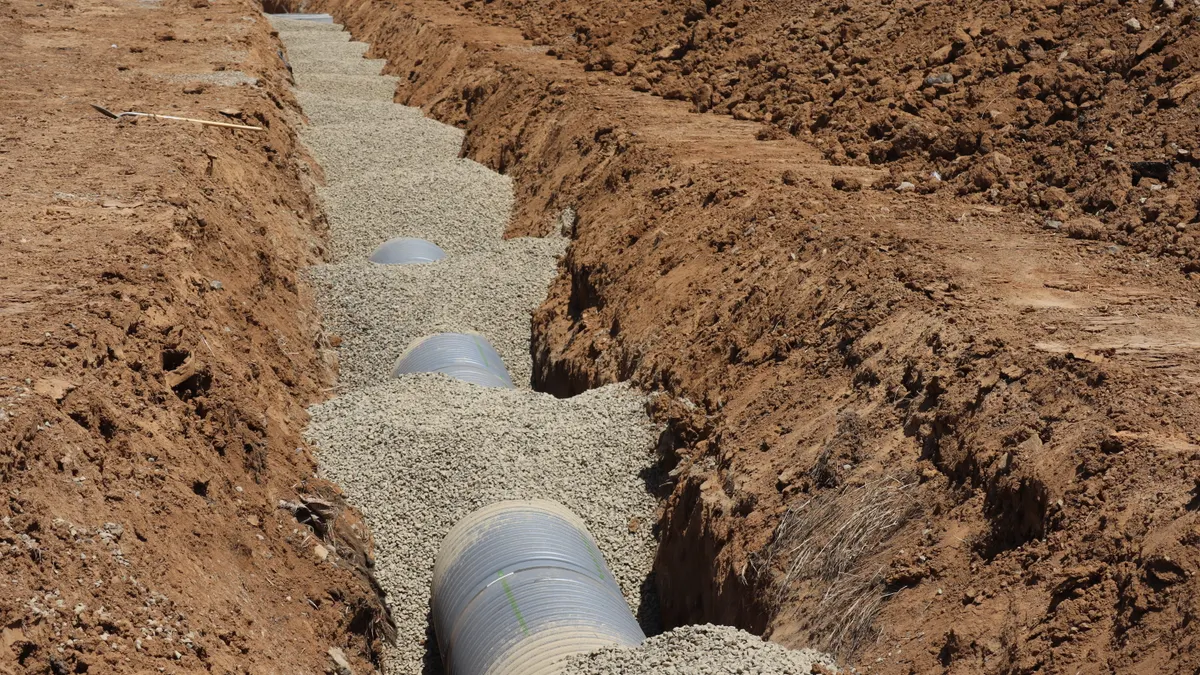
Quick Answer: behind a retaining wall, use drain tile. A French drain is a separate landscape drain that usually belongs outside the wall. In Retaining Wall Drain Tile vs French Drain: What Goes Behind the Wall, the answer is usually drain tile, gravel, and filter fabric—not a French drain trench wrapped around the outside of the wall.
Key takeaways
- Drain tile is the pipe system that relieves pressure behind a retaining wall.
- A French drain is better thought of as yard drainage that intercepts water before it reaches the wall.
- Behind the wall, the core assembly is usually perforated pipe in clean gravel with filter fabric, plus a clear outlet route.
- If the wall is holding back wet soil, drain tile is usually the default choice.
- If surface water or hillside runoff is the main problem, a French drain may help before water ever gets to the wall.
- A French drain does not replace wall drainage when hydrostatic pressure can build behind the wall.
- If outlet routing is impossible, neither system is a good fix on its own; the wall design needs reconsideration.
For the broader component list, the hub on [retaining wall materials and components] can sit alongside this page as the next step.
What actually goes behind a retaining wall?
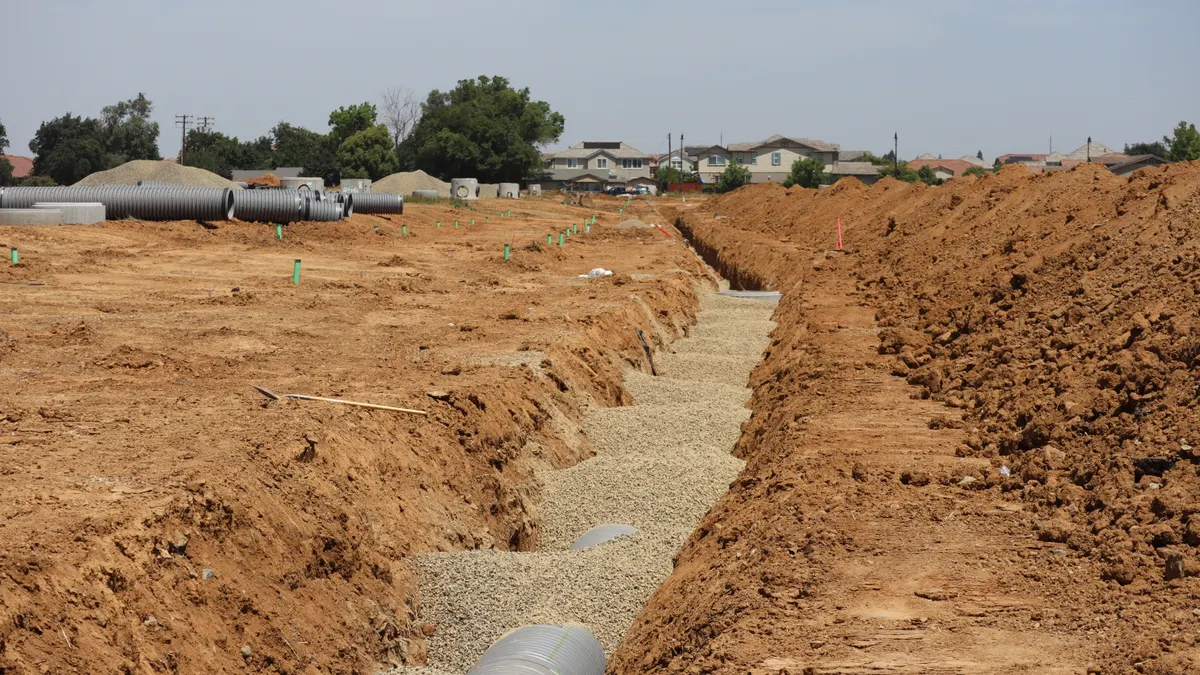
Drain tile goes behind the wall; a French drain usually does not. The part that matters in Retaining Wall Drain Tile vs French Drain: What Goes Behind the Wall is the water-removal path inside the wall zone: perforated pipe at the base, surrounded by clean drain rock, wrapped or separated with filter fabric, and pitched to an outlet.
That setup exists for one reason: reduce water pressure against the back of the wall. Water in soil creates hydrostatic pressure, and a wall does not care whether that water came from rain, irrigation overspray, or uphill seepage. It only cares that the water is there. The pipe gives that water a low-resistance route out. The gravel gives water a place to collect and move. The fabric keeps fine soil from clogging the system.
A French drain can still be useful on the site, but its role is different. It intercepts water in the yard, not inside the wall fill. Think of it as upstream drainage. If runoff is coming down a slope and soaking the wall area, a French drain may reduce the load on the wall. It does not replace the drain tile behind the wall when the wall itself holds back saturated soil.
The practical distinction is simple: behind the wall, you want a wall drainage assembly. Around the yard, you may want a French drain. The first controls pressure at the structure. The second controls where water goes before it reaches the structure.
Retaining wall drain tile: the right choice behind the wall
Drain tile wins behind a retaining wall because it is built for that exact cavity. In most wall assemblies, “drain tile” means perforated pipe laid at or near the base of the backfill zone, usually in a trench of drain rock. The pipe may be 4 inches in diameter in many common residential applications, though the exact size is a design choice, not a slogan. What matters is the layout: collect water at the wall base, move it to an outlet, and keep soil fines out.
This is the system to choose when the wall holds back soil that can get wet. That includes basement walks, terraced yards, driveway cut slopes, and any wall where groundwater, irrigation, or rain can accumulate behind the structure. It is also the safer choice when the wall height or site exposure makes failure expensive. A wall with poor drainage tends to bow, stain, lean, or lose material through joints and seams.
Because drain tile only works if the outlet stays open and the fabric does not clog with fines, maintenance and execution matter. If the pipe dead-ends, sags, or dumps into a spot that cannot drain, the water still sits there. That means the system is only as good as the outlet routing. A clean pipe behind a wall with nowhere to go is a false sense of security.
This is also the wrong answer for a wall where the real issue is surface runoff from above. If most water is coming from the yard uphill, drain tile alone can become a catch basin for problems that should have been intercepted earlier. In that case, a French drain upstream may reduce the burden before the wall drainage system has to do the heavy lifting.
French drain: where it helps, and where it does not
A French drain wins when the wall is not the first place water should be handled. It is a trench drain system, usually with perforated pipe in gravel and filter fabric, but its purpose is to intercept groundwater or surface seepage away from a building, slope, or landscape feature. In plain terms, it collects water in the yard and moves it somewhere else.
That makes it useful on the uphill side of a retaining wall, where runoff keeps pouring toward the wall after storms. A properly placed French drain can cut down on saturation in the soil above or beside the wall, which lowers the amount of water that ever reaches the wall drainage zone. On a lot with clay soil, a hardpan layer, or persistent seepage from a slope, that upstream interception can be the difference between manageable moisture and a saturated backfill.
The drawback is structural mismatch. A French drain is often dug where water naturally wants to travel through the landscape, while a retaining wall drain tile system is embedded directly behind the wall to control pressure at the face of the structure. If you put only a French drain on a wall that still traps water behind it, the wall can still be loaded with pressure from the soil mass it is retaining.
This is why a French drain is not the better choice when the question is “what goes behind the wall?” It may be part of the overall drainage plan, but it is not the wall drainage plan itself. If the site has a wall and a wet yard, the right answer can be both systems in different places, each doing a separate job.
Retaining wall drain tile vs French drain: the honest side-by-side
Drain tile is the better choice for the wall zone itself; a French drain is the better choice for intercepting water before it reaches the wall. The question is not which one is universally superior. The real question is where the water is causing trouble.
| Criteria | Retaining wall drain tile | French drain | Winner for [condition] |
|---|---|---|---|
| Primary job | Relieve pressure behind the wall | Intercept water in the landscape | Drain tile for wall backfill |
| Typical location | Directly behind the wall base | Upslope, along a yard flow path | Drain tile where wall holds soil |
| Core material | Perforated pipe, gravel, filter fabric | Perforated pipe, gravel, filter fabric | Tie on materials, different purpose |
| Water removal path | Short, direct route to an outlet | Diversion route away from the problem area | Drain tile when pressure is the issue |
| Main failure mode | Clogging or blocked outlet | Poor placement or shallow interception | Drain tile if the wall is already built |
| Best soil conditions | Wet backfill, seepage, clay-prone sites | Surface runoff, hillside seepage, soggy lawns | French drain for upslope water |
| Structural importance | High | Indirect | Drain tile near a retaining wall |
| Installation priority | Must align with wall design | Can be added to improve site drainage | Drain tile during wall construction |
| What it cannot do | It cannot fix bad yard grading | It cannot substitute for wall drainage | Neither, if the wall already traps water badly |
The table points to the same conclusion every time: the wall needs drain tile, while the site may also need a French drain. The better system depends on where the water starts and where the pressure is building. If the water is behind the wall, drain tile wins. If the water is coming from uphill and has not reached the wall yet, a French drain can win the first battle.
What the wall drainage assembly should include
Drain tile behind a retaining wall should be part of a complete assembly, not a lone pipe in dirt. The usual ingredients are perforated pipe, clean drain rock, filter fabric, and an outlet that actually carries water away. A collector trench at the base of the wall may be part of the layout, especially on longer walls where water needs a defined low point before it exits.
Perforated pipe is the collection line. The holes allow water from the gravel zone to enter the pipe. Drain rock creates a highly permeable pocket so water reaches the pipe instead of lingering in soil. Filter fabric separates the native soil from the rock so fines do not migrate into the drainage layer and clog it. The outlet routing gives the whole system somewhere to discharge.
That part deserves emphasis because it is where many generic explanations get lazy. A wall drainage system is not complete until the water has a destination. Depending on the site, that destination may be daylight at a slope, a storm drainage connection where allowed, or another approved discharge point. The details matter because the pipe is only transport. It is not storage.
The layout also matters. A wall with no collector trench, no clean outlet, or no separation between soil and rock is much more likely to hold water than move it. If the site plan does not support a functioning outlet, a different drainage strategy may be needed before the wall goes in. That is why drainage belongs in the design phase, not as a patch after the wall starts leaning.
For a deeper look at the parts themselves, the hub on retaining wall materials and components is the natural companion page.
When a French drain belongs in the project anyway
A French drain belongs in the project when water is arriving from outside the wall zone. That is the clearest exception to the “drain tile behind the wall” rule. If a hillside, roof downspout, patio edge, or uphill swale keeps sending water toward the wall, a French drain can protect the wall by intercepting that water first.
The best time to add one is before the retaining wall backfill gets saturated. In some yards, a French drain along the uphill side can reduce how much water ever reaches the retaining wall system. In others, the French drain is a parallel fix for a soggy lawn or a drainage line that keeps cutting across the site. That makes it a landscape drainage tool, not a wall substitute.
The downside is cost, complexity, and the chance of solving the wrong problem. A French drain dug in the wrong place can collect little water and still fail to protect the wall. It can also create a false sense of security if the wall itself lacks a working drain tile system. A wet wall with a dry yard still needs drainage behind it.
There are also site limits. If the property has nowhere suitable to send collected water, a French drain just relocates the problem. That is why outlet routing and the overall water removal path matter more than the pipe label.
The verdict: which one should you choose?
Choose drain tile if the wall is retaining soil and you need water moved out from behind the wall. Choose a French drain if the main problem is runoff or seepage coming toward the wall from the yard or slope. Neither if there is no legal, practical outlet route for the collected water or the wall design cannot support a drainage layer.
Therefore, the cleanest recommendation for this topic is the one that matches how the systems actually work. Drain tile is the wall’s drainage line. A French drain is the landscape’s interception line. If the wall is the structure at risk, the pipe belongs behind the wall. If the water is still outside the wall, the French drain gets first shot at it.
FAQ
Is drain tile the same as a French drain?
No, they are related but not the same. Drain tile behind a retaining wall is part of the wall’s drainage assembly, while a French drain is usually a landscape trench that intercepts water before it reaches a problem area. Both can use perforated pipe, gravel, and filter fabric, but the job and placement are different.
Do you need both drain tile and French drain?
Not always, but many sites benefit from both. If the wall is retaining wet soil, drain tile behind the wall is still needed. If runoff from uphill keeps saturating the area, a French drain can reduce the amount of water reaching the wall. The need depends on where the water starts and where it can legally drain.
Which drainage system is better behind a retaining wall?
Drain tile is better behind a retaining wall. It is built to relieve pressure directly in the wall zone using perforated pipe, gravel, and filter fabric, then route water to an outlet. A French drain may help nearby, but it does not replace the drainage layer the wall itself needs.
Drafted with AI; not yet reviewed by a person.