
 By Admin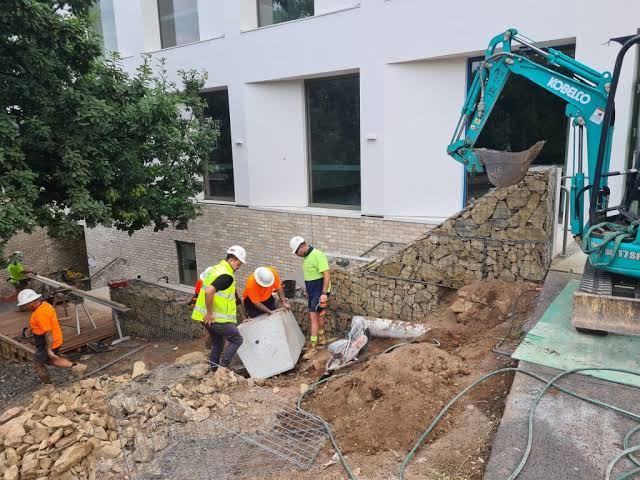
Last updated: September 10, 2026
Key Takeaways
- If the wall is under 3 to 4 feet high and the damage is clearly localized, repair often makes sense.
- If your wall is under about 4 feet, the damage is localized, and you can document a clear cause-and-effect chain, repair is usually the cleaner move.
- A retaining wall is not a fence panel.
- Retaining walls are built to resist soil pressure, but water adds weight fast.
A 4-foot wall can look harmless and still be on borrowed time. That is the trap. When I compare retaining wall replacement vs repair, I do not start with appearance; I start with function. A repair is the better call when the wall is damaged in one area but still structurally sound. Replacement belongs on the table when the wall has lost alignment, drainage, or footing support, because patching those problems usually just buys you one season.
I write about exterior building systems and failure patterns for a living, so I look at retaining wall replacement vs repair the way an inspector or contractor would: by cause, not by cosmetics. Straight to the point.
The real question: is the wall failing at the surface or at the structure?
Structural failure means replacement. A limited problem in one section usually points to repair. Blunt? Yes. Necessary? Also yes. A retaining wall is not a fence panel. It holds back lateral earth pressure, water, and freeze-thaw movement. Once the base shifts, the backfill stays saturated, or drainage stops working, a cosmetic fix just gets pushed around again.
Think of it this way: a crack in a cap block is often repair territory; a wall that bows outward 1 to 2 inches across several feet is more like a warning flare. A missing cap, loose mortar, or a single rotten timber can be isolated. But a wall leaning along its full run, separating at multiple joints, or showing stair-step cracking near the base is saying something louder. The load path has changed. That is the ugly truth.
The generic advice that gets people in trouble is “repair it if it’s not too bad.” Useless without context. If the wall is under 3 to 4 feet high and the damage is clearly localized, repair often makes sense. But if the wall is taller, supports a driveway, or sits near a structure, I would treat replacement as the safer default unless a qualified contractor or engineer says the base and drainage are still sound. The National Concrete Masonry Association and the Federal Emergency Management Agency both emphasize drainage, loading, and site conditions in retaining wall performance.
Two outside references are useful here: the National Concrete Masonry Association publishes retaining wall guidance, and local building departments often follow International Building Code requirements for soil retention and drainage. If your wall is close to a house, a permit review is not red tape; it is part of the retaining wall replacement vs repair decision. Better a form than a collapse.
When repair is the smart move
Repair works when the wall is basically stable and the problem stays small. I would choose it for a cracked cap, a small patch of loose mortar, minor surface spalling, a single broken timber, or a drain outlet that is clogged while the wall itself has not shifted. Real defects, yes. Automatic emergency, no.
What makes repair attractive? Targeted cost, less mess, and less downtime. If the wall is still plumb, the footing has not settled, and you can point to a clear cause such as a blocked weep hole or deteriorated top course, a proper fix may buy you years. On concrete block walls, that can mean resetting caps, replacing damaged blocks, adding drainage relief, or repairing a local section of backfill. On timber walls, it may mean swapping out the failed members and adding drainage rock behind the repaired area.
But the diagnosis has to be right. If water pressure caused the damage and you do not restore drainage, the same failure comes back. That is the part people miss. They patch the visible mess and leave the hidden problem alone. The wall may look better. It may even look fine. Then the next storm shows up, and the bill does too.
Repair is not the answer if the wall has rotated, if the base is undermined, if multiple sections are moving, or if the wall was built without proper drainage fabric, gravel, or perforated pipe. It is also a poor choice when the wall is carrying something unforgiving, such as a driveway edge, a pool deck, or a slope with a lot of runoff. In those cases, a repair may be a stopgap, not a solution.
If your wall is under about 4 feet, the damage is localized, and you can document a clear cause-and-effect chain, repair is usually the cleaner move. If you cannot explain why the wall failed, that alone is reason enough to be cautious.
When replacement is the safer investment
Replacement wins when the wall has failed as a system. That includes widespread leaning, repeated cracking, bulging along long spans, rotting or crushed materials, major settlement at the base, or chronic water buildup behind the wall. At that point, the wall is not asking for a patch. It is telling you the original design, materials, or drainage are no longer adequate. No sugarcoating.
Replacement also makes sense when the wall is nearing the end of its useful life. A timber wall that is soft, split, and waterlogged can be repaired in spots, but if the posts and ties are failing, a full rebuild is usually the cleaner long-term answer. The same logic applies to older masonry walls with mortar loss, missing reinforcement, or a footing that was never deep enough for the soil conditions. Fixing the face does not fix the base.
The upside of replacement is simple: you get to solve the engineering problem, not just the symptom. You can correct height, add drainage, use better backfill, deepen the footing, and choose materials that match the load. A properly rebuilt wall also gives you a chance to improve access for maintenance and inspection, which matters more than people think. A wall that can be drained and inspected is easier to keep alive.
The downside is cost, disruption, and the possibility of uncovering more damage once excavation starts. Replacement usually means demolition, haul-off, new base preparation, and rebuilding to code. It is the more expensive path in labor and time, and in tight yards it can be a nuisance for weeks. In short: more money, more mess. It is also the wrong call if the wall is mostly sound and only one section needs attention.
I would choose replacement without hesitation if a wall is leaning visibly, has multiple cracks at different elevations, shows soil washout, or has repeated drainage failure after previous repairs. In those cases, a partial fix is often false economy.
Side-by-side: what actually changes the decision
Here is the comparison I use when the choice is not obvious.
| Criteria | Repair | Replacement | Winner for this condition |
|---|---|---|---|
| Visible movement | Good for no movement or very slight local movement | Better when wall is leaning, bulging, or rotating | Replacement if movement is ongoing |
| Damage scope | Best for one damaged area or one failed component | Better for repeated or widespread failure | Repair if damage is isolated |
| Drainage problem | Can work if the drain issue is local and reachable | Better if drainage is missing or fundamentally wrong | Replacement if water is trapped behind the wall |
| Wall height | More suitable for shorter walls | Safer for taller or heavily loaded walls | Replacement as height and load increase |
| Base condition | Works if footing/base is intact | Needed if footing has settled or shifted | Replacement if the base has moved |
| Material condition | Good for a sound wall with one bad part | Better for rotten, crushed, or deteriorated materials | Repair if most material is still sound |
| Disruption | Less excavation and shorter downtime | More site disruption and haul-off | Repair if access is tight |
| Long-term certainty | Lower if the underlying cause is unclear | Higher because the system is rebuilt | Replacement if the cause is structural |
| Permitting/code risk | Sometimes simpler for minor fixes | More likely to trigger permit review | Repair if work stays clearly minor |
| Cost sensitivity | Usually lower upfront burden | Higher upfront burden but broader fix | Repair if budget is the main constraint and structure is sound |
The pattern is pretty plain: repair favors limited damage, access, and budget; replacement wins on movement, water, and uncertain structure. Still stuck? Ask one question: “Has the wall failed in one spot, or has the whole system started to move?” That usually settles the matter.
The hidden factor most people miss: drainage decides the outcome
Drainage is often the real reason the wall failed, and it is the reason many repairs do not last. Retaining walls are built to resist soil pressure, but water adds weight fast. If water has nowhere to go, it pushes harder, especially after heavy rain or freeze-thaw cycles. Like a soaked sponge, only with a lot more force.
That is why I put drainage ahead of appearance. A wall with a cracked face but functioning drainage may be repairable. A wall with no drain pipe, no clean gravel zone, or clogged outlets is often a candidate for replacement, even if the visible damage looks modest. I would be skeptical of any contractor who talks only about “resetting blocks” or “patching the face” without discussing where the water will go.
The practical test is simple: if you can see outlet pipes, gravel backfill, and geotextile separation, repair may be enough. If you cannot verify those details, or the wall was built before modern drainage practice became common, replacement deserves serious consideration. That is especially true on slopes with clay soil, where water moves slowly and pressure can build behind the wall.
Older walls can be tricky. A 20-year-old wall can look acceptable until one wet season exposes a drainage defect that has been building for years. If the wall has already been repaired once and failed again, I treat that as evidence that the underlying issue may still be present, and I would consult a qualified contractor or engineer before spending more money.
What I would choose in common real-world scenarios
I would choose repair for a short garden wall with one cracked cap, a single loose block, or minor timber decay, provided the wall is still straight and the drainage path is clear. That is the practical sweet spot for repair: small defect, known cause, low structural risk.
Replacement is the better pick for a driveway-retaining wall, a wall with visible lean, a wall taller than about 4 feet, or a wall that has already been patched and failed again. Those conditions raise the stakes because the failure can spread, and a partial fix may leave you paying twice.
I would also lean toward replacement when the wall sits near a house foundation, a pool, or a sidewalk. Those are not places for guesswork. The consequences of movement are bigger than the wall itself.
The hardest call is a wall that looks halfway between the two. In that case, I look at three things: age, movement, and water. If two of those are bad, I do not recommend another repair as the main plan.
When do I change my mind?
I change the answer to replacement when the wall shows 3 signs: movement, water, and repeat damage. If I see only one of those, repair may still make sense. If I see all three, I do not trust a patch.
There are a few exception scenarios where the overall verdict flips:
- The wall is short but supports a critical edge. A 3-foot wall near a garage slab or pool deck can deserve replacement even if the damage looks minor, because the consequence of failure is high.
- The repair would cost almost as much as rebuilding. If the wall needs major excavation just to reach the problem, the labor gap between repair and replacement narrows fast.
- The wall has hidden drainage defects. If the face looks bad but the real issue is a missing drain pipe or saturated backfill, replacement is the cleaner fix.
- The wall is historic or decorative, not load-bearing. A low decorative wall with no real retained soil can often be repaired more aggressively, because the structural demand is much lower.
Should I repair or replace my retaining wall?
Choose repair if the wall is mostly straight, the damage is localized, and you can identify a fixable cause such as a cracked cap, one failed section, or a blocked drain outlet. Choose replacement if the wall is leaning, bulging, repeatedly cracking, waterlogged, or failing at the base. Neither if the wall is near a house, driveway, pool, or other critical structure and you cannot confirm the drainage and footing are sound; in that case, get a structural or geotechnical opinion before spending money.
Frequently asked questions
Can a leaning retaining wall be repaired?
Sometimes, but only if the lean is slight and caused by a localized issue. A wall that is visibly bowing or rotating across a long span usually needs replacement, not a cosmetic fix.
Is it worth fixing an old retaining wall?
Yes, if the wall is old but still structurally stable and the problem is limited. No, if the materials are deteriorated, the drainage is poor, or the wall has already failed once after repair.
What is the most common reason retaining walls fail?
Poor drainage is one of the most common causes. Water pressure behind the wall can overwhelm the structure even when the face still looks fine.
Do I need a permit to replace a retaining wall?
Often yes, especially for taller walls or walls that support a slope, driveway, or structure. Local rules vary, so I would check with your building department before work starts.
How do I know if a repair is just delaying replacement?
If the wall keeps moving, cracks reappear after rain, or the same section fails again, the repair is probably a delay rather than a solution.