
 By Admin
Last updated: November 03, 2026
Key Takeaways
- The outlet should send collected water to a place that can handle it, not just a lower spot.
- Daylight drainage is the simplest option when the pipe can emerge at a lower open point without creating erosion.
- The right outlet depends on slope, soil, and where water can go without creating a new problem.
- Place the outlet where water can leave freely, stay visible, and avoid cutting into the slope or soaking the wall base.
Quick Answer
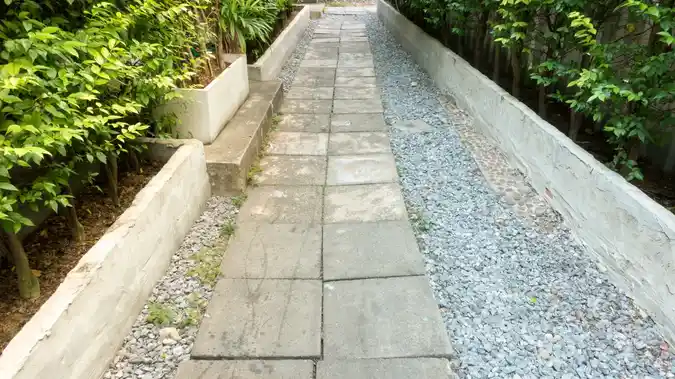
The four main Retaining Wall Drainage Outlet Options for Sloped Yards are daylight discharge, a collector pipe, a storm drain connection where allowed, and weep holes for limited cases. In many yards, the best answer is the one that gives water a clear, inspectable exit. A 2-inch or 4-inch pipe may still fail if the discharge point is wrong. The outlet, not just the pipe behind the wall, decides whether water drains safely.
A retaining wall drainage outlet is the point where water leaves the wall system after it has been collected, and on a sloped yard that outlet choice matters more than the pipe behind the wall. The wrong outlet can dump water where it erodes soil, stains masonry, or feeds the same wet spot that caused the wall problem in the first place.
Retaining Wall Drainage Outlet Options for Sloped Yards: the outlet choice decides where the water goes
The outlet should send collected water to a place that can actually take it, not just a place that is downhill. In a sloped yard, that usually means one of four paths: daylight discharge, a storm drain connection where allowed, a collector pipe to a safer discharge point, or a surface outlet that spreads flow over stable ground. The wall’s drainage layer, usually gravel backfill wrapped or separated with landscape fabric, and the perforated drain pipe only move water to the outlet; they do not solve the discharge problem by themselves.
The practical question is simple: where does the water end up after it leaves the wall? If it comes out at a low point on the slope, it can carve a channel. If it comes out too high, it can back up into the drain stone. If it exits at a hard edge like a driveway or patio, it may splash and move fines. The outlet has to fit the site, the soil, and the finish grade.
This is the part generic wall guides often skip. They talk about drainage behind the wall, but not about the last 10 feet. That last stretch is where many failures show up. A pipe that works in theory can still be a bad choice if it empties onto a neighbor’s yard, onto a walking path, or into an area that stays soft after every storm.
Daylight drainage works best when the slope gives you a clean exit

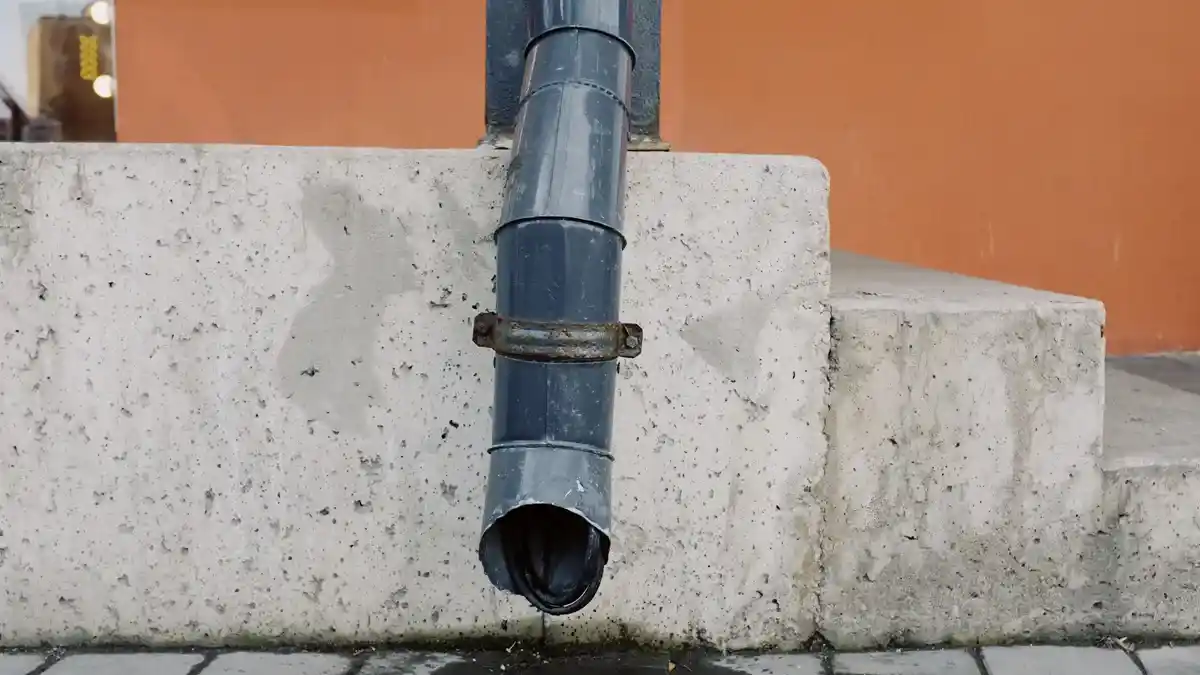
Daylight drainage is the simplest outlet option when the pipe can emerge at a lower open point without creating erosion. The pipe runs through the wall drainage layer and exits the slope face where gravity can carry water away naturally. This is the common choice for shorter walls, hillside lots, and places where the grade keeps falling long enough to let the pipe “daylight” above an erosion-resistant area.
The advantage is plain: there are fewer parts to clog, freeze, or fail. A perforated drain pipe can collect water behind the wall, then a solid outlet section carries it out to the open air. If the outlet is placed where the ground can shed water, daylight drainage can be dependable and easy to inspect. A cleanout near the outlet is worth having, because it gives a straight path for flushing sediment before a clog becomes a backup.
The drawback is just as plain. Daylight drainage is wrong for a yard where the outlet would blast water onto a bare slope, down a steep cut, or into an area that erodes every season. A short splash apron of stone can help, but it does not fix a bad exit location. In many cases, I would not choose daylight unless the water can leave on a stable slope with enough runout to dissipate its force.
For this option, outlet placement is the whole game. A 2-inch or 4-inch pipe that exits above exposed soil can still cause a gully if the point of discharge is poorly chosen. The safest practical use is a visible outlet that can be checked after a storm and kept clear of leaves, roots, and silt.
What are the best retaining wall drainage outlet options?
The best retaining wall drainage outlet options are daylight discharge, a collector pipe to a safe discharge point, a storm drain tie-in where local rules allow it, and a controlled surface discharge over protected ground. The right one depends on slope, soil, and where the water can go without creating a new problem.
A collector pipe is the right move when the wall drains well but the site does not offer a safe place for water to exit near the wall. In that setup, the perforated pipe behind the wall feeds a solid pipe that runs to a lower, more suitable outlet. That can be a daylight exit far from the wall, a storm system connection, or a discharge point into a swale. This is common on sloped yards where the wall sits on a terrace and the natural low point is somewhere else.
A storm drain connection can work when the property already has a legal, designed place for runoff to go. The benefit is that the water leaves the site through an existing drainage network instead of across the yard. The risk is that improper tie-ins can overload the system or violate local requirements, so this option is not a casual do-it-yourself detail.
Surface discharge is the least fancy and sometimes the most practical. The outlet empties onto rock, turf reinforced for flow, or another protected surface that can handle periodic water. The goal is to slow and spread the water, not let it cut a trench. This option is useful when a short outlet has to end near the surface and the yard can tolerate occasional flow.
The wrong choice is any outlet that looks convenient but ignores the path the water will take during a heavy rain. A wall that drains to a low pocket with no outlet is a sump with a prettier face.
How to place the outlet so it does not undo the wall
Place the outlet where water can leave freely, stay visible, and avoid cutting into the slope or soaking the wall base. That usually means keeping the outlet at the low end of the drainage run, giving it a straight path, and protecting the discharge area with stone or another stable surface.
A good outlet location starts with the wall’s low point, because water naturally collects there. If the site has a perforated drain pipe behind the wall, the pipe should run with enough fall to move water toward the exit, not trap it in sags. A common mistake is to let the outlet end inside a swale of soft soil. Another is to place it so close to the wall face that overflow can wash back against the base.
Use these placement rules:
- Set the outlet at the lowest practical point of the drainage line so water does not sit in the pipe.
- Keep the discharge visible from the yard, which makes it easier to inspect after storms.
- End the outlet on stable ground, stone, or a protected drainage surface, not loose topsoil.
- Keep the discharge far enough from the wall that flow cannot return to the backfill zone.
- Add a cleanout where the line changes direction or where sediment is likely to collect.
This is also where outlet height matters. If the pipe exits too low, it can clog with debris or hold water in a depression. If it exits too high, it may leave standing water behind the wall. The best placement gives the pipe a continuous path and lets the discharge point do real work, not just look tidy.
When a cleanout is worth adding
A cleanout is worth adding anywhere the pipe run is long, hidden, or likely to collect silt. On a sloped yard, that usually means the safer drainage design is the one you can maintain, and a cleanout makes that possible without tearing up the wall.
A cleanout is a vertical access point or capped tee that lets a hose or drain rod reach the line. It is especially useful where a perforated drain pipe connects to a solid collector pipe, where the run turns more than once, or where gravel backfill may shed fine sediment into the line during the first few storms. If the outlet ever slows, a cleanout can save a lot of digging.
The trade-off is obvious: a cleanout adds one more fitting that must stay sealed and accessible. If it ends up buried under mulch or trapped behind a planter, it becomes useless. It also does not make a poor outlet acceptable. A cleanout helps a good drainage path stay open; it does not rescue a pipe that empties in the wrong place.
In practice, I would favor a cleanout on any outlet run that is longer than a short, straight exit. A 4-inch line with a cleanout at the low end is easier to service than a buried pipe with no access. The opening should be marked or left in a place where a homeowner can find it in minutes, not after a shovel session. For maintenance planning, the University of Minnesota Extension recommends keeping drainage paths accessible and inspectable after storms.
Where weep holes fit, and when they are the wrong outlet
Weep holes are a direct outlet option for some walls, but they are not the best choice for every sloped yard. They let water escape through the wall face itself, usually above grade, and they can work when the wall is short, the discharge area is well protected, and the water will not stain or erode the finish surface.
The appeal is easy to see. Weep holes are simple, visible, and cheap in the sense that they do not need a long pipe run. If the wall uses a gravel drainage zone behind it, the holes give that water a release point before pressure builds. In a small retaining wall, that can be enough.
The problem is that weep holes put water right on the face of the wall. On a sloped yard, that can mean streaking, wet staining, algae growth, or a series of tiny outlets that each drip onto the same strip of ground. If the yard below the wall is planted, the water may wash mulch out of beds. If the wall is tall or the drainage load is heavy, weep holes can also concentrate flow too sharply.
I would treat weep holes as a limited-use option, not the default answer, and I would check the wall design with a qualified professional before relying on them. They make more sense where the wall is low, the finish can tolerate moisture, and the discharge area has stone or other protection at the base. If the wall needs a cleaner exterior or the slope below is vulnerable, a piped outlet is usually the better route. For drainage and retaining wall basics, Penn State Extension is a useful reference.
For a deeper planning context, the hub on retaining wall design and planning is the right place to start before choosing a wall system that will need an outlet at all.
Common outlet mistakes that cause the next repair
The most common mistakes are routing water to the wrong low point, burying the outlet, skipping protection at the discharge point, and assuming a storm drain tie-in solves every problem. Each one creates a cost the owner usually sees later as erosion, damp soil, or a wall that begins to move.
The first mistake is letting the outlet discharge onto bare slope soil. The cost is a small channel that grows every storm. The fix is a stone apron, a swale, or a longer collector pipe to a safer point.
The second mistake is burying the outlet under mulch, landscaping, or new fill. The cost is blockage from debris and no way to inspect the line. The fix is to leave the outlet visible and accessible.
The third mistake is using a perforated pipe all the way to the exit. That can let soil enter the line near the outlet and clog it faster. The fix is to switch to a solid pipe section near the discharge point.
The fourth mistake is tying into a storm drain without confirming the system can accept it. The cost can be backflow, surcharge, or a connection that has to be removed later. The fix is to verify the permitted discharge path before the pipe is buried.
The fifth mistake is ignoring the wall base. If water leaves the outlet and immediately washes back toward the footing or lower backfill, the system has not really drained at all. The cure is simple: route the discharge away from the wall, not just away from the pipe.
A practical rule for choosing the outlet type
Choose daylight drainage when the slope gives you a visible, stable exit; choose a collector pipe when the safe discharge point is farther away; choose a storm drain only when the connection is designed and allowed; choose weep holes only for low, simple walls that can tolerate face discharge.
That rule covers most sloped yards better than trying to force one outlet type everywhere. The outlet is not a decorative detail. It is the last decision that determines whether the wall drains water or merely stores it in a hidden place. A 2-foot wall on a mild slope and a 6-foot wall above a steep side yard need different answers, even if both have gravel backfill, landscape fabric, and a perforated drain pipe behind them.
If the answer is still uncertain, the safest bias is toward a visible, serviceable outlet with a cleanout and a discharge point that can handle repeated flow. That is less elegant than a buried mystery pipe, but it is much easier to live with after the first hard rain. The wrong outlet is the one nobody can find when it starts backing up.
Where should a retaining wall drain outlet go?
It should go to a place where water can leave without eroding soil, flooding a low spot, or returning to the wall base. On a sloped yard, that often means daylight at a stable lower point, a collector pipe to a safer discharge area, or a permitted storm drain connection. The outlet should stay visible and accessible.
Can a retaining wall drain into a yard?
It can, but only if the yard area can absorb or spread the water without forming a trench or soggy pocket. A short surface discharge onto stone or protected turf may be acceptable. Bare soil, mulch beds, and steep unprotected slopes are poor targets because they erode quickly.
Do all retaining walls need an outlet?
Yes, if the wall is designed to collect water behind it, that water needs a place to leave. The outlet may be a weep hole, a daylight pipe, a collector line, or another approved discharge path. A wall without a real outlet can hold water, build pressure, and create movement over time.
Drafted with AI; not yet reviewed by a person.